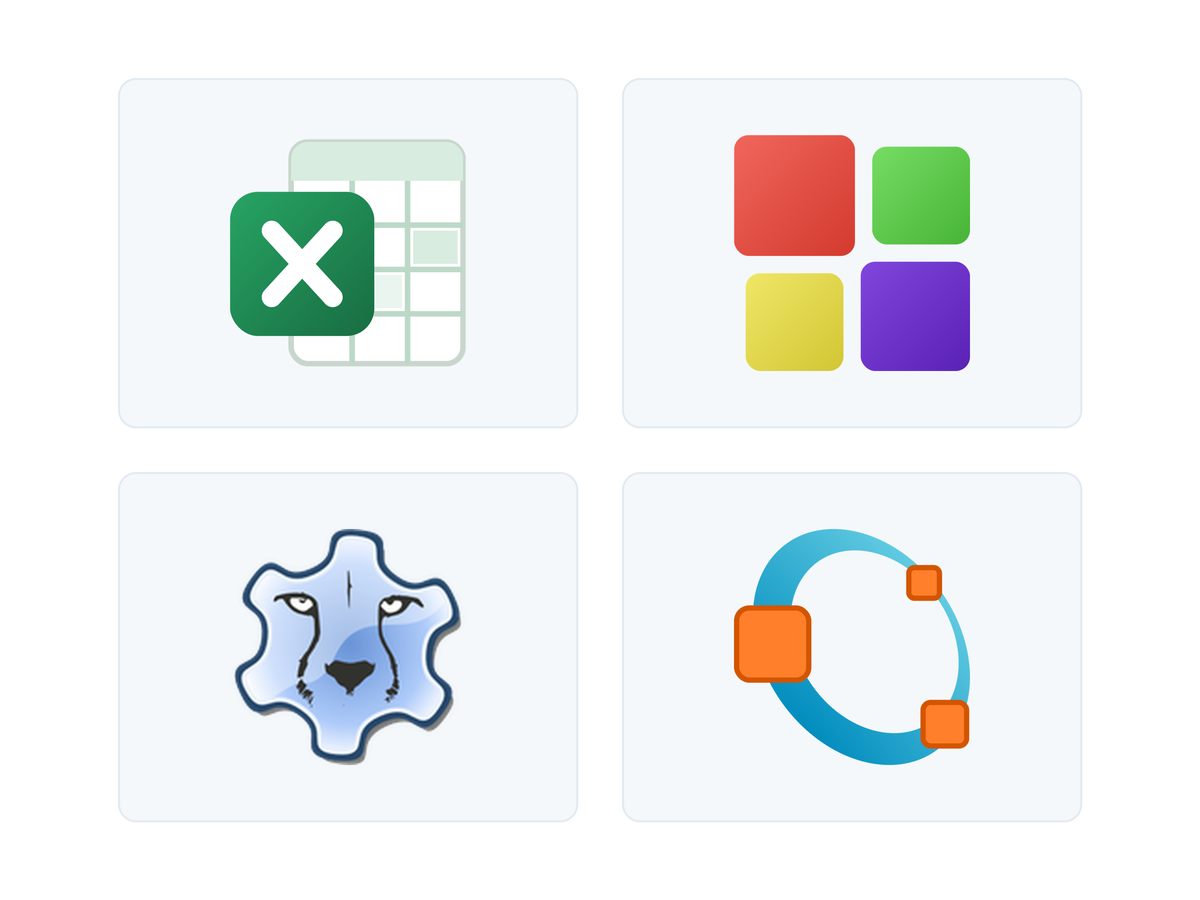
Not everybody who owns a GPIB instrument writes Python. The Tutorials page has four new entries, each with a ready-made project or script to download, so you can have an instrument answering before you decide whether the language suits you.
- Excel VBA: a macro-enabled workbook that reads measurements straight into cells, with timestamps and a chart. It would not be my first choice for talking to a GPIB bus either, but if the numbers have to end up in a spreadsheet anyway, the detour through another language is hard to justify.
- C with Code::Blocks: a Windows project you open, build and run. Also the gentlest way in if you have never used the IDE before.
- Lazarus / Free Pascal / Delphi: the same idea in Object Pascal, as a small GUI application rather than a console program.
- GNU Octave: on Linux, and the odd one out. It needs no VISA runtime at all, because it speaks VXI-11 to the adapter directly.
The example code in them is exactly that, example code. It exists to save you the first afternoon, not to become a library you depend on.
Linux GPIB: parallel poll and T1
Unrelated to the tutorials, and new as of today: the GPIBEE driver in linux-gpib now supports parallel poll and a settable T1 delay.
Parallel poll lets the controller ask up to eight instruments in a single bus cycle which of them wants attention, instead of asking each one in turn. It is an old concept and rarely the right one today: serial poll is simpler, is not capped at eight devices, and is understood by practically everything on the bus. Some older instruments do expect a parallel poll though, and for those nothing else will do.
This is not a new feature of the adapter itself. Parallel poll has been available in USBTMC and VXI-11 mode for a long time; today's commit brings the native Linux GPIB driver in line with them.
T1 is the settling time a talker waits before it declares the data on the bus valid. Shortening it speeds up bulk transfers on a bus that can take it.
The change is in commit e077ed on the linux-gpib master branch. It has not been upstreamed yet, so a release tarball will not have it. Build from git if you want it. The Linux GPIB tutorial walks through that.